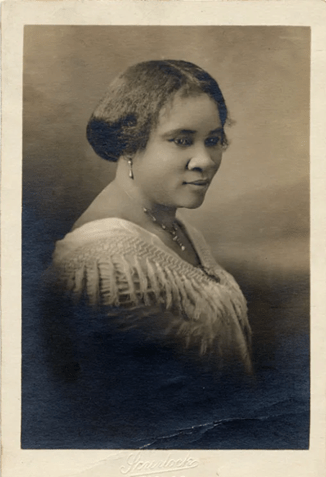
Figure 1 Madam C.J. Walker, early twentieth-century entrepreneur and founder of a national hair-care empire
Abstract: This essay examines Madam C.J. Walker’s business career (1900–1919) to argue that her success reflected both the opportunities and constraints of early twentieth-century capitalism. By combining organizational strategy with community-based networks, Walker built a scalable enterprise that challenged racial exclusion while reinforcing the importance of alternative economic structures.
At the turn of the twentieth century, American capitalism was expanding rapidly, yet its opportunities remained profoundly unequal. Within this environment, Madam C.J. Walker emerged not only as one of the most successful entrepreneurs of the early twentieth century, but also as a figure whose business practices illuminate the complexities of race, gender, and economic power in modern America. Her rise from poverty to leadership of a national hair-care empire between 1900 and her death in 1919 reveals how marginalized individuals could navigate and reshape the structures of American capitalism.
Born Sarah Breedlove in 1867 to formerly enslaved parents, Walker’s early life was defined by economic hardship. Yet her experience also positioned her within networks of Black labor and community that would later support her entrepreneurial efforts. By the early 1900s, Walker had developed and marketed a line of hair-care products specifically designed for African American women. Her business expanded rapidly through a combination of direct sales, training programs, and strategic branding. By the 1910s, the Madam C.J. Walker Manufacturing Company employed thousands of sales agents and generated substantial profits.
Walker’s success was not merely a personal achievement; it was rooted in a broader economic transformation. As historians of business have emphasized, the growth of modern enterprises in the early twentieth century depended on organizational capabilities—particularly systems of distribution, marketing, and managerial coordination.
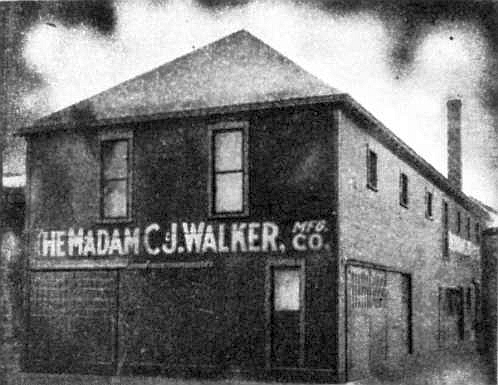
Figure 2 The Madam C.J. Walker Manufacturing Company in Indianapolis, symbolizing the expansion of Black-owned enterprise in the early twentieth century.
Walker’s company exemplified these principles. Rather than relying solely on product innovation, she built a highly structured sales network of “Walker Agents,” who were trained not only in sales techniques but also in personal presentation and financial independence. This system created a scalable business model that extended across the United States and into the Caribbean and Central America.
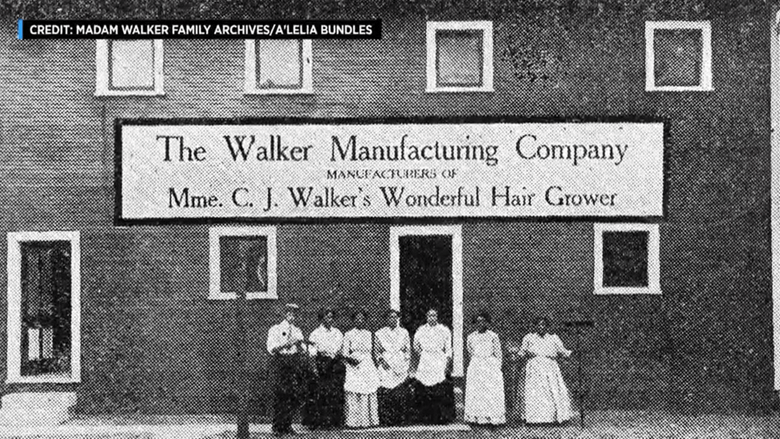
Figure 3 Graduates of the Walker School of Beauty Culture, representing the national network of trained sales agents.
At the same time, Walker’s enterprise functioned within a national market that had been deliberately constructed through political and legal processes in the late nineteenth century. The integration of transportation networks, communication systems, and federal economic policy enabled businesses like Walker’s to reach customers far beyond local communities. Yet this national market remained uneven, particularly for African Americans who faced legal segregation and economic exclusion. Walker’s success, therefore, depended on her ability to navigate both the opportunities and constraints of this system.
Her marketing strategy reveals a sophisticated understanding of consumer identity and social context. Walker’s advertisements emphasized not only beauty but also respectability, hygiene, and economic self-improvement. In doing so, she aligned her products with broader aspirations within Black communities during the Progressive Era. Unlike many white-owned firms, Walker’s company directly addressed the needs of Black women, creating a niche market that mainstream businesses had largely ignored.
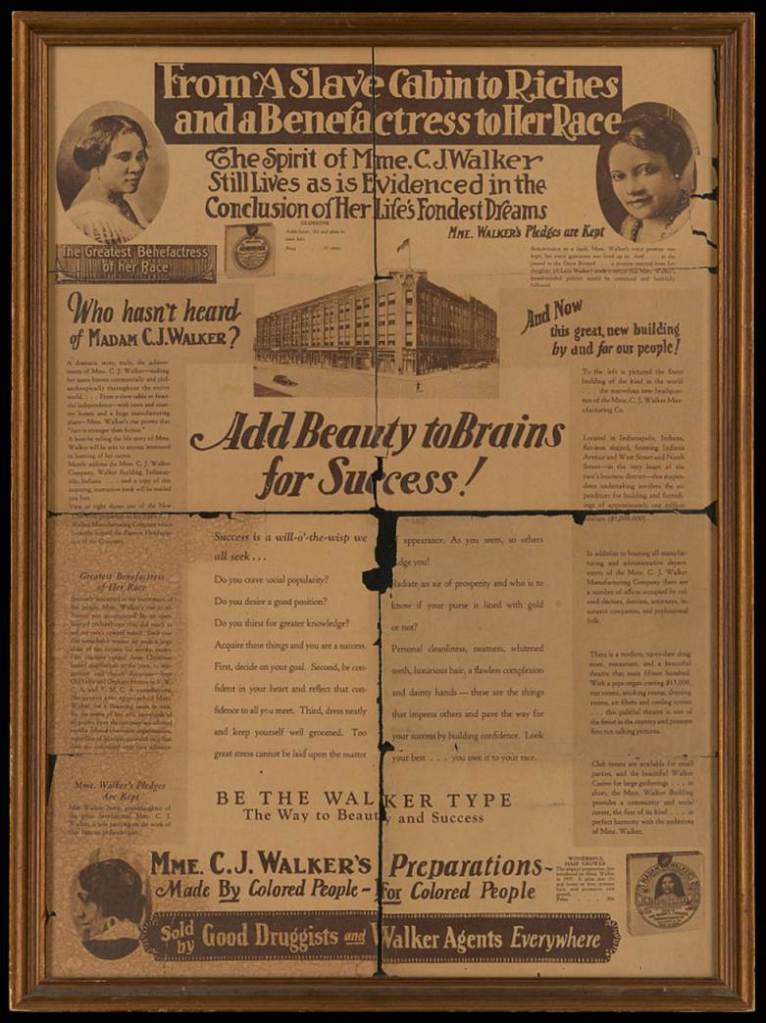
Figure 4 Advertisement for Madam C.J. Walker’s products, emphasizing beauty, health, and economic success within African American communities.
Walker also leveraged community networks to expand her business. Her agents operated within churches, social organizations, and local communities, blending economic activity with social engagement. This approach challenges simplistic economic models that assume individuals act in isolation. As scholars have noted, economic activity often depends on cooperation, trust, and shared institutions rather than purely individual decision-making. Walker’s success illustrates how communal structures could function as economic assets, enabling growth even in the absence of formal institutional support.
However, Walker’s career also highlights the limitations of Progressive Era economic reforms. While reformers often promoted regulation as a means to stabilize markets and promote fairness, historians such as Gabriel Kolko have argued that such policies frequently reinforced the power of established businesses rather than disrupting inequality. Walker’s enterprise developed largely outside these regulatory frameworks, suggesting that for marginalized entrepreneurs, success often depended less on state action than on alternative strategies of community-based enterprise and self-organization.
Walker’s business model also reflects the broader intellectual and political climate of the early twentieth century. Progressive Era thinkers increasingly emphasized efficiency, organization, and expertise as keys to economic success. Walker adopted many of these principles, particularly in her emphasis on training, standardization, and professionalization among her agents. Yet she adapted them to serve a different purpose: not the expansion of state power or corporate consolidation, but the economic empowerment of Black women.
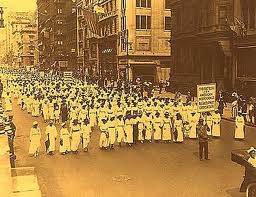
Figure 5 Delegates at a national convention of Walker agents, illustrating the scale and social impact of her business network.
Equally significant was Walker’s commitment to philanthropy and social advocacy. She invested in educational institutions, supported anti-lynching campaigns, and promoted economic independence within Black communities. Her wealth was thus not only a measure of personal success but also a tool for collective advancement. This dual role complicates traditional interpretations of early twentieth-century capitalism, which often focus exclusively on accumulation rather than redistribution.
From a historiographical perspective, Walker’s story underscores the importance of narrative in understanding economic history. As scholars of business history have argued, historical narratives are not merely descriptive but analytical, shaping how we interpret economic processes and outcomes. By focusing on Walker’s lived experience, historians can move beyond abstract models to examine how economic systems functioned in practice—particularly for those excluded from mainstream institutions.
Ultimately, Madam C.J. Walker’s business career reveals both the possibilities and limits of American capitalism in the early twentieth century. Her success demonstrates that entrepreneurial innovation, organizational skill, and community engagement could overcome significant structural barriers. At the same time, her experience highlights the persistence of inequality within the national market and the need for alternative pathways to economic power.
Walker’s legacy, therefore, is not simply that of a successful entrepreneur. She represents a distinct model of economic agency, one rooted in resilience, collective advancement, and strategic adaptation within a constrained system. In doing so, she challenges historians to reconsider the boundaries of business history and to recognize the diverse actors who shaped the modern American economy.
Bibliography:
Bundles, A’Lelia. On Her Own Ground: The Life and Times of Madam C.J. Walker. New York: Scribner, 2001.
Bundles, A’Lelia. “Madam C. J. Walker’s First National Convention (August 30–31, 1917).” Walker Family Archives. Accessed online.
Chandler, Alfred D. “Organizational Capabilities and the Economic History of the Industrial Enterprise.” 1992.
Kolko, Gabriel. The Triumph of Conservatism: A Reinterpretation of American History, 1900–1916. New York: Free Press, 1963.
Library of Congress. “Portrait of Madam C. J. Walker.” Prints and Photographs Division. Accessed online.
Library of Congress. “Madam C. J. Walker Manufacturing Company Building, Indianapolis.” Prints and Photographs Division. Accessed online.
Popp, Andrew, and Susanna Fellman. “Writing Business History: Creating Narratives.”
Schomburg Center for Research in Black Culture, New York Public Library. “Walker Agents and Beauty Culture Training Schools.” Digital Collections. Accessed online.
Smithsonian National Museum of African American History and Culture. “Madam C. J. Walker Hair Product Advertisement.” Collections Database. Accessed online.
Walker, Madam C.J. Madam C.J. Walker on Womanhood, Hair, and Beauty. Indianapolis, 1914.
 The Past, Reconsidered, with Lisa G